


At first glance, a touchscreen massage gun may not look very different from a traditional model. Both are designed to deliver percussive massage, and both typically offer adjustable speed settings and interchangeable massage heads. The more noticeable difference appears when users start operating the device.
Traditional massage guns usually rely on physical buttons and indicator lights. Touchscreen models, on the other hand, use a digital interface to display settings and allow users to interact with different controls. This change may seem small, but it affects the way a product is operated, how its functions are presented, and how manufacturers approach product design. For brands developing massage equipment, understanding these differences is useful when deciding which type of product fits their target market.

1. The Control Interface Changes How Users Operate the Device
Most traditional massage guns have a relatively simple control system. Users press a button to turn on the device or move between speed levels. Some models also include separate buttons for power and mode selection.
This design has an obvious advantage: it is familiar and easy to understand. However, when more functions are added, the control panel can become less straightforward. Users may need to remember different button combinations or press the same button several times to reach a preferred setting.
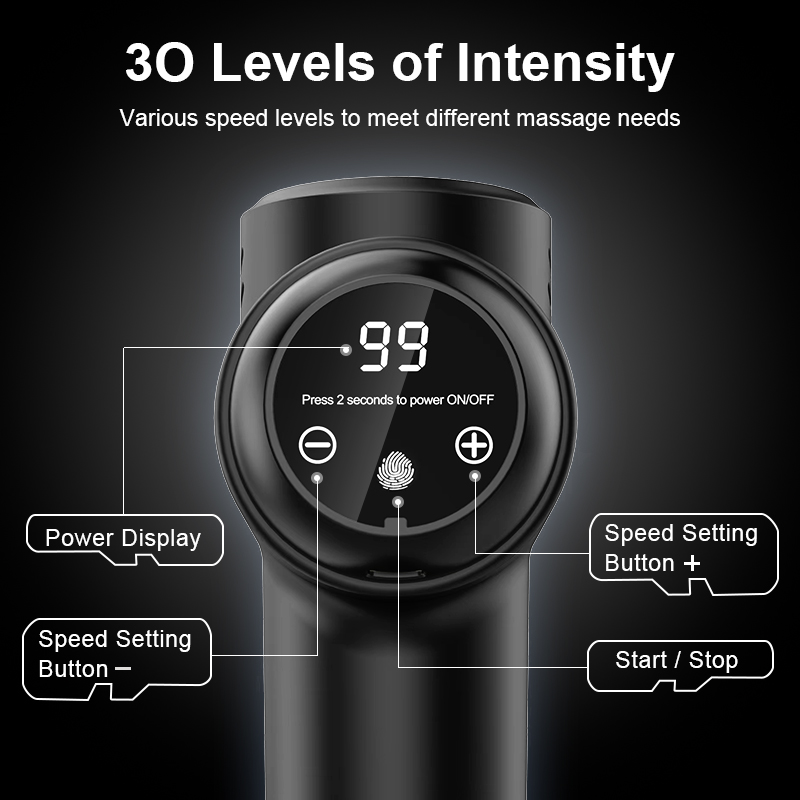
A touchscreen massage gun takes a different approach. Instead of relying entirely on physical buttons, it presents available controls on a digital display. Depending on the model, users may be able to select speed levels, switch operating modes, or check device information directly on the screen.
The screen does not necessarily make operation easier in every situation. Its value depends on how clearly the functions are arranged and whether users can access them without interrupting their grip.
2. Display Information Is Easier to Read and Identify
Another difference is the way each device communicates its operating status.
On traditional massage guns, small indicator lights are commonly used to show battery levels or speed settings. These indicators are functional, but they may not provide much detail. When several lights are placed close together, users may also need to check the instruction manual to understand what each one represents.
A massage gun with touch screen can present information in a more direct format. For example, the display may show the selected speed level, remaining battery status, or current operating mode, depending on the product’s electronic configuration.
This is particularly relevant for products with several adjustable settings. Rather than relying on a series of lights, users can see the selected option on the display itself.
For manufacturers, screen readability deserves attention during development. A display that is too small, difficult to read, or crowded with unnecessary information can make the product harder to use. A simple interface is often more practical than one that tries to show too much at once.
3. Speed Adjustment Can Be More Intuitive
Speed adjustment is one of the main functions of a massage gun. Different users may prefer different intensity levels depending on their comfort and intended use.
With a conventional model, speed selection often involves pressing a button repeatedly. This works well for products with only a few settings, but it may become less convenient when the device offers more adjustment options.
A digital massage gun can display its available speed settings directly on the screen. Users can identify the current level and, where supported, select another setting through the touch interface.
There is an important distinction here: a touchscreen does not automatically improve motor performance or make speed adjustment more precise. The actual experience still depends on the motor, control system, and software design. The screen mainly changes how users access and view those functions.
4. The Screen Also Influences the Overall Product Design
Adding a touchscreen affects the appearance and structure of a massage gun. Traditional models usually have a control button or a small indicator panel integrated into the housing. A touchscreen requires a dedicated display area, along with the electronic components and connections needed to support it.
This can influence the shape of the housing, the position of the handle, and the available internal space. Manufacturers must make sure the screen is visible during operation without placing it somewhere that interferes with the user’s grip.
For brands planning a custom massage gun, these details are worth discussing early in product development. Screen size, housing materials, button placement, and overall dimensions should be considered together. Otherwise, adding a display may improve the appearance but make the device less comfortable to hold.
5. Touchscreen Models Bring Additional Development Requirements
From a manufacturing perspective, a touchscreen version involves more than replacing a few buttons with a screen. The display needs to communicate properly with the control board, while its position and mounting structure must fit the overall housing design.
Several details require attention:
-
Display positioning: The screen should be easy to see while the user holds the massage gun.
-
Touch sensitivity: The interface should respond consistently to normal touch inputs.
-
Screen protection: The display needs suitable protection against scratches and everyday handling.
-
Power consumption: Screen operation should be considered when assessing battery capacity and operating time.
-
Electronic integration: The display, control board, and motor control system need to work together.
-
Product testing: Screen response, operating functions, and electronic connections should be checked before mass production.
These requirements are relevant to both OEM and ODM projects. For buyers working with a massage gun manufacturer, reviewing a working sample is especially important. Product images alone cannot show whether the interface responds properly or whether the screen is comfortable to use during operation.
6. Touchscreen or Traditional: Which One Fits the Market?
Neither design is automatically the better choice. The decision depends on the intended product positioning and what customers expect from the device.
Traditional massage guns remain a practical option for brands that want a straightforward product with familiar controls. They may also suit product ranges where simple operation and a basic configuration are the main priorities.
Touchscreen models offer a more technology-oriented appearance and a different way to present operating information. They may be worth considering for brands developing products with multiple settings or targeting customers who prefer digital controls.
However, the interface should not be the only factor in product selection. Motor performance, battery life, noise level, weight, massage head compatibility, and overall build quality still matter. A touchscreen cannot compensate for weaknesses in these areas.
7. What Should Buyers Look for During Product Development?
When sourcing a touchscreen massage gun, B2B buyers should look beyond the display itself. It is worth checking how the interface works under normal operating conditions and whether the available functions match the intended market.
Buyers can discuss screen specifications, speed settings, battery configuration, housing design, and customization options with the manufacturer. They should also evaluate a sample to check the display’s visibility, touch response, grip comfort, and overall operation.
For Phenitech, product development involves considering how individual components work together rather than treating the touchscreen as a separate selling point. Whether a brand needs a simple control system or a more advanced digital interface, the final configuration should reflect its product positioning and customer requirements.
Conclusion
The difference between a touchscreen massage gun and a traditional model is mainly found in the control experience and the way operating information is displayed. Physical buttons remain practical for straightforward operation, while a touchscreen provides more room to organize settings and present device information.
For brands and distributors, the right choice depends on the product’s intended market, configuration, and cost requirements. A well-designed touchscreen can add value to a massage gun, but its success ultimately depends on how well the interface works with the rest of the device.


